Helping SE South Dakota Rural Internet current and potential consumers find affordable, reliable and financially competitive (with our city cousins) internet options and avoid misleading info about various types of broadband or high-speed internet.
Where is this all going for CL??? Here's today's Outage Report--IF it is truly Valid--how does this outfit stay alive--it's like a walking (not talking) Zombie--who's propping this up? What about the FCC Investigation????
Again,CLICK HEREfor a "clearer" view of this very foggy, hazy situation!
Pay attention especially to these lyrics and think CL...
"Hello, how are you? Have you been alright through all those lonely, lonely, lonely, lonely nights?([Sure is lonely when the phones and internet don't work...]
....if you'd pick up that telephone[AND ANSWER CONSUMER COMPLAINTS] ...Are you still the same? Don't you realize the things we did, we did, were all for real, not a dream? [DREAM--seems like a dream and NOT real"]
I just can't believe they've (CL) all faded out of view[ESPECIALLY on the news} ...Blue days, black nights....[that's what customers and employees probably have who depend on CL internet for their job, employment) ....love you need ain't gonna see you through [customer's love affair with CL is over--CL, you're not gonna see them again--they can't trust you anymore]
..why the little things you planned ain't comin' true--[like upgrading the speed, fixing consumer's problems,--yeah--those "little" things--ha, ha]
...give me some time, I'm living in twilight [Ooops, CL--we don't have any more time for you, customers are living in internet twilight--lights out] ....ring, ring, ring OK so no one's answering [CL Support]. well can't you just let it ring a little longer, longer, longer? ...I'll just sit tight. [CL--are you kidding-- customers can't keep letting the phone ring and ring and ring--they will sit tight all right--on their pocket books.]
...let it ring forever more. [Sure seems like forever since this continued outage report started up a month ago]
.... Repeat as give me some time, I'm living in twilight [CL tells customers "Give me some time....]
Please don't call "support numbers"
posted below — most probably it's a scam. Make sure to report and
"downvote" such posts. Also don't post any of your personal information.
(Adds Chinese foreign ministry comment)
By David Shepardson and Diane Bartz
WASHINGTON,
Dec 27 (Reuters) - President Donald Trump is considering an executive
order in the new year to declare a national emergency that would bar
U.S. companies from using telecommunications equipment made by China's
Huawei and ZTE, three sources familiar with the situation told Reuters.
It
would be the latest step by the Trump administration to cut Huawei
Technologies Cos Ltd and ZTE Corp , two of China's biggest network
equipment companies, out of the U.S. market. The United States alleges
that the two companies work at the behest of the Chinese government and
that their equipment could be used to spy on Americans.
The
executive order, which has been under consideration for more than eight
months, could be issued as early as January and would direct the
Commerce Department to block U.S. companies from buying equipment from
foreign telecommunications makers that pose significant national
security risks, sources from the telecoms industry and the
administration said.
While the order is unlikely to
name Huawei or ZTE, a source said it is expected that Commerce
officials would interpret it as authorization to limit the spread of
equipment made by the two companies. The sources said the text for the
order has not been finalized.
The executive order
would invoke the International Emergency Economic Powers Act, a law that
gives the president the authority to regulate commerce in response to a
national emergency that threatens the United States.
The
issue has new urgency as U.S. wireless carriers look for partners as
they prepare to adopt next generation 5G wireless networks.
The
order follows the passage of a defense policy bill in August that
barred the U.S. government itself from using Huawei and ZTE equipment.
China's
Foreign Ministry Spokeswoman Hua Chunying said that she did not want to
comment on the order as it had not been officially confirmed.
"It's best to let facts speak for themselves when it comes to security problems," Hua said.
"Some
countries have, without any evidence, and making use of national
security, tacitly assumed crimes to politicize, and even obstruct and
restrict, normal technology exchange activities," she added.
"This in reality is undoubtedly shutting oneself off, rather than being the door to openness, progress and fairness."
Huawei
and ZTE did not return requests for comment. Both in the past have
denied allegations their products are used to spy. The White House also
did not return a request for comment.
The Wall Street Journal first reported in early May that the order was under consideration, but it was never issued.
HIT TO RURAL NETWORKS
[I am told that SpeedConnect relies on this equipment, while certain other Wireless companies DO NOT]
Rural
operators in the United States are among the biggest customers of
Huawei and ZTE, and fear the executive order would also require them to
rip out existing Chinese-made equipment without compensation. Industry
officials are divided on whether the administration could legally compel
operators to do that.
While the big U.S. wireless
companies have cut ties with Huawei in particular, small rural carriers
have relied on Huawei and ZTE switches and other equipment because they
tend to be less expensive.
The company is so
central to small carriers that William Levy, vice president for sales of
Huawei Tech USA, is on the board of directors of the Rural Wireless
Association.
The RWA represents carriers with fewer
than 100,000 subscribers. It estimates that 25 percent of its members
had Huawei or ZTE equipment in their networks, it said in a filing to
the Federal Communications Commission earlier this month. The
RWA is concerned that an executive order could force its members to
remove ZTE and Huawei equipment and also bar future purchases, said
Caressa Bennet, RWA general counsel. It would cost $800 million to $1 billion for all RWA members to replace their Huawei and ZTE equipment, Bennet said.
Separately,
the FCC in April granted initial approval to a regulation that bars
giving federal funding to help pay for telecommunication infrastructure
to companies that purchase equipment from firms deemed as a threat to
U.S. national security, which analysts have said is aimed at Huawei and
ZTE.
The FCC is also considering whether to require
carriers to remove and replace equipment from firms deemed a national
security risk. In March, FCC Chairman Ajit Pai said
"hidden 'back doors' to our networks in routers, switches — and
virtually any other type of telecommunications equipment - can provide
an avenue for hostile governments to inject viruses, launch
denial-of-service attacks, steal data, and more."
In
the December filing, Pine Belt Communications in Alabama estimated it
would cost $7 million to $13 million to replace its Chinese-made
equipment, while Sagebrush in Montana said replacement would cost $57
million and take two years.
Sagebrush has noted
that Huawei products are significantly cheaper. When looking for bids in
2010 for its network, it found the cost of Ericsson equipment to be
nearly four times the cost of Huawei. (Reporting by Diane Bartz and
David Shepardson; Additional reporting by Christian Shepherd in BEIJING;
Editing by Chris Sanders, Leslie Adler & Shri Navaratnam)
Researchers from RMIT say they have developed a detector the width of a
human hair to replace existing dining table-sized readers.
A new development in fibre optics could make internet speeds up to
100 times faster – by detecting light that has been twisted into a
spiral.
The research, published in the journal Nature Communications, can be
used to easily upgrade existing networks and significantly boost
efficiency, scientists say.
Fibre optic cables use pulses of light to transmit information, but
currently information can only be stored through the colour of the
light, and whether the wave is horizontal or vertical.
By twisting light into a spiral, engineers effectively create a third
dimension for light to carry information: the level of orbital angular
momentum, or spin. “It’s like DNA, if you look at the double helix
spiral,” said Min Gu from RMIT University. “The more you can use angular
momentum the more information you can carry.”
Researchers in the US had previously created a fibre that could twist light, but Gu’s team is the first to create a reasonable-size detector that can read the information it holds.
Previous detectors were “the size of a dining table”, but the new
detector is the width of a human hair. “We could produce the first chip
that could detect this twisting and display it for mobile application,”
Gu said.
The technology could be used to upgrade fibre optic networks like Australia’s national broadband network – although controversy still dogs the decision to reduce the scheme’s use of fibre optics in favour of copper wire. NBN Co is on schedule to complete the network by 2020. However, the
rollout represents a downgrade on the initial plan – put forward by
Labor – that would have installed fibre optic cables directly into homes
(known as fibre to the premises). Instead, many households have received fibre to the node – which is cheaper but produces slower speeds.
For fibre to the node, optic fibre cable only runs as far as a central
point in the neighbourhood, and copper wire connects that node to each
home.
Original ADSL connections use an average of 2.5km of copper wire per
connection, fibre to the node uses 500 metres, fibre to the curb uses 30
metres, and fibre-to-the-premises uses none.
In January, NBN Co admitted that three out of four customers with fibre-to-the-node would not be able to access the NBN’s top speed tier.
The CEO, Stephen Rue, revealed plans to increase the number of premises with fibre to the curb, which uses less copper than fibre-to-the-node.
Gu said his new research could still work with networks with large amounts of copper wire.
“We will definitely reduce this hurdle,” he said. “We will make this transfer more efficient.”
However, because the new cables are required to effectively twist
light, any upgrade could involve replacing existing fibre networks.
By 2020, NBN Co estimates that 4.6m homes will have fibre to the
node, 1.4m will have fibre to the curb, and 2m will have fibre to the
premises.
A spokesman said the network was “prepared for future demand”, but
advances like those demonstrated at RMIT would need further acceptance
before they were operationally ready.
“New communications technologies are continually being tested in labs
many years in advance of being commercialised. They require widespread
acceptance from equipment manufacturers and network operators before
they are ready for operational deployment.”
BUT 4 DAYS ONLY--ENDS OCTOBER 11--that's WEDNESDAY!!!
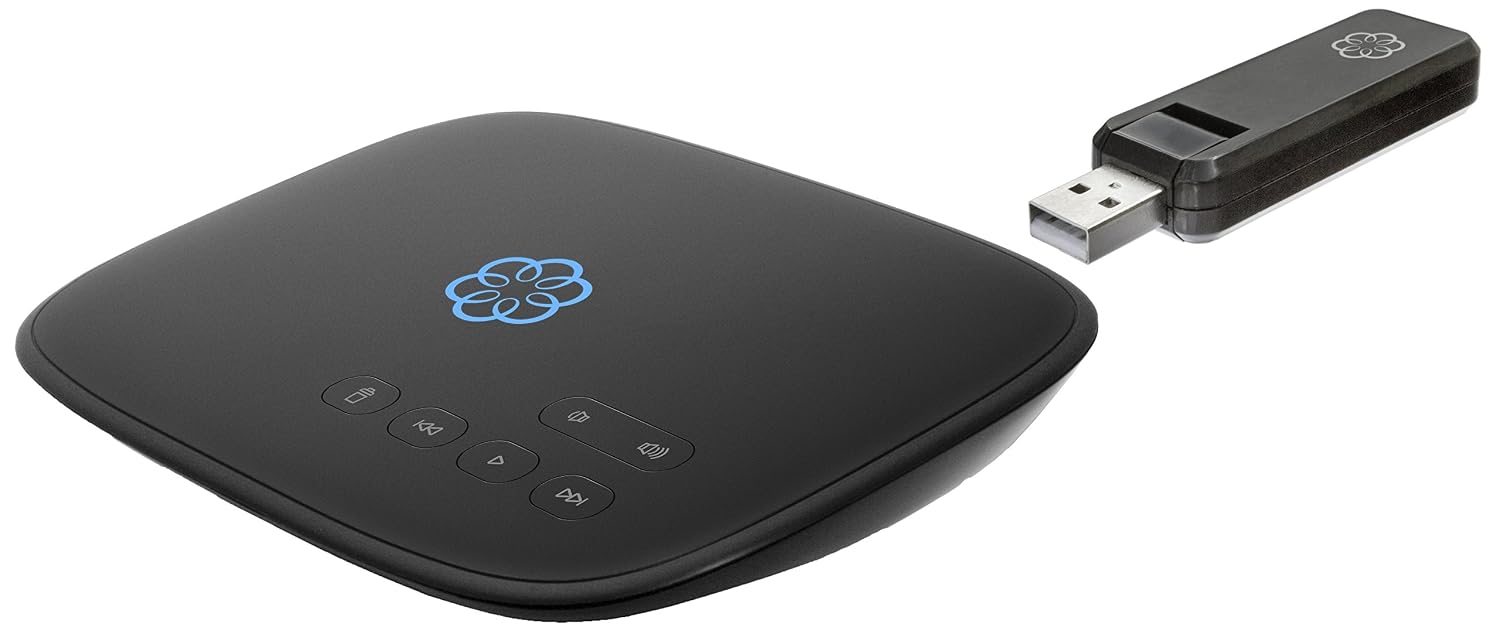
Ooma had a learning curve and has a few idiosyncrasies but all in all has been reliable (more so than the previous AT&T Base station and much less expensive). When our very reliable and advanced Rural internet system has an outage (very infrequently and doesn't last long) we use a T Mobile Hotspot which is really useless for most internet--except mobile--usage. It has perhaps 9 mBs Download and has deteriorated to barely 1 mbs Upload--so be aware of the future of all these 4G cellular hot spots. We use it only as a backup also due to high cost of monthly usage and cap on usage is insanely low--but so is AT&T, Verizon, etc.
911 TEST: Due to a neighbor's issues with using 911 with a cell phone, decided to test the Ooma, and our 2 smartphones as to whether or how fast they connected to 911 and showed our correct phone number and location to the 911 Operator in our County.
We were pleasantly surprised at these results:
Ooma with our backup T Mobile hot spot--after a number of rings, reached County Emergency system--reported back the correct phone number and location (Oooma also sends emails for 911 alerts)
Oooma with our regular Broadband Wi-Fi service--After fewer rings than with the T Mobile Hotspot, also reached the County Emergency system, which reported back the correct phone number and location as above.
AT&T Samsung Smart Phone--after several rings (fewer than with the Ooma), reached 911 County Emergency operator who reported back correct phone number and same location as above.
T Mobile LG smartphone--after only 1 ring, reached the correct 911 County Emergency operator who reported back correct phone number and location.
This needs to be qualified by not knowing whether we would get the same results in another location away from home, as sure that cell tower pings, etc may affect location, etc.
Phones themselves seem to make a difference (brand, settings). Ooma is portable, but prefer not to have to take a bulky Ooma, home phone along when more compact cell phones do the same thing--including calls on wi-fi.
We rarely use our prepaid cell phones at home and when on the road and take the T Mobile Hotspot (we were grandfathered into the $10/month for 2 gB) and use the Ooma app, Hangouts, Google phone to make calls). Guess what! We pay less than $50/year for the prepaid Cell usage--both phones!
By Terrence Newton
The global rollout of 5G is well underway, and we soon may see new
small cell towers near all schools, on every residential street,
dispersed throughout the natural environment, and pretty much
everywhere. But the safety of this technology is in serious question,
and there is a raging battle to stop the taxpayer funded implementation of 5G.
The new cell network uses high-band radio frequency millimeter waves to deliver high bandwidth data to any device within line of sight.
Today’s cellular and Wi-Fi networks rely on microwaves – a
type of electromagnetic radiation utilizing frequencies up to 6
gigahertz (GHz) in order to wirelessly transmit voice or data. However, 5G applications will
require unlocking of new spectrum bands in higher frequency ranges
above 6 GHz to 100 GHz and beyond, utilizing submillimeter and
millimeter waves – to allow ultra-high rates of data to be transmitted
in the same amount of time as compared with previous deployments of
microwave radiation. [Source]
One of the ways 5G will enable this is by tapping into new, unused
bands at the top of the radio spectrum. These high bands are known as
millimeter waves (mmwaves), and have been recently been opened up by
regulators for licensing. They’ve largely been untouched by the public,
since the equipment required to use them effectively has typically been
expensive and inaccessible. [Source]
Among the many potential problems with exposure to 5G radio waves are
issues with the skin, which is interesting when you consider that this
technology is already being used in the military for crowd control
purposes.
This kind of technology, which is in many of our homes,
actually interacts with human skin and eyes. The shocking finding was
made public via Israeli research studies that were presented at an
international conference on the subject last year. Below you can find a
lecture from Dr. Ben-Ishai of the Department of Physics at
Hebrew University. He goes through how human sweat ducts act like a
number of helical antennas when exposed to these wavelengths that are
put out by the devices that employ 5G technology. [Source]
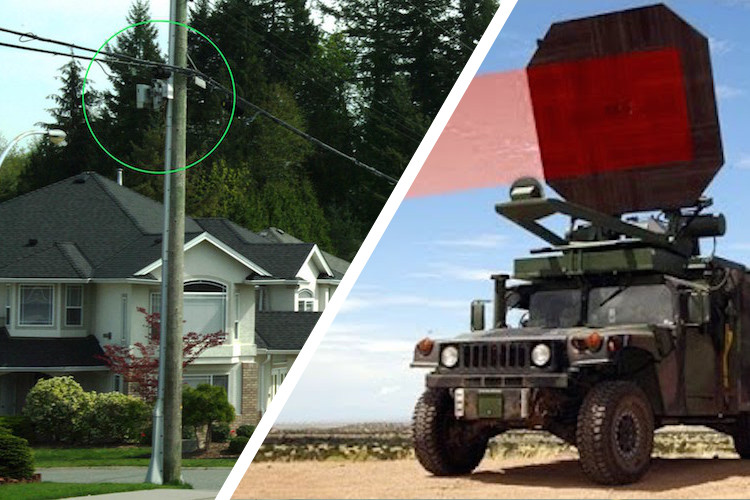
The U.S. military developed a non-lethal crowd control weapon system
called the Active Denial System (ADS). It uses radio frequency
millimeter waves in the 95GHz range to penetrate the top 1/64 of an inch
layer of skin on the targeted individual, instantly producing an
intolerable heating sensation that causes them to flee.
This technology is becoming ubiquitous in top world militaries,
demonstrating how genuinely effective this radio frequency energy can be
at causing harm to humans and anything else.
U.S., Russian, and Chinese defense agencieshave
been active in developing weapons that rely on the capability of this
electromagnetic technology to create burning sensations on the skin, for
crowd control. The waves are Millimetre waves, also used by the U.S.
Army in crowd dispersal guns called Active Denial Systems. [Source]
Final Thoughts
The fight over 5G is heating up at the community level, and awareness
of this important issue is spreading fast. For more background on 5G, watch this video from Take Back Your Power,
featuring Tom Wheeler, Former FCC Chairman and corporate lobbyist, who
delivers a rather intimidating and presumptuous speech praising this new
technology. The fight over 5G is heating up at the community level,
though, and now is the time to speak out against it.
U.S. Sen. John Thune (R-S.D.) chairman of the Committee on
Commerce, Science, and Transportation, will convene a hearing
titled “Broadband: Opportunities and Challenges in Rural
America,”at 10:00 a.m. on October 4, 2018. This hearing allows the
Committee, as part of its ongoing efforts, to assess the progress of
broadband deployment in rural America and continue to explore ways in
which closing the digital divide will benefit American jobs and the
economy. Witnesses:
Mr. Godfrey Enjady, General Manager, Mescalero Apache Telecom, Inc.
Mr. Denny Law, General Manager and CEO, Golden West Telecommunications
Ms. Mona Thompson, General Manager, Cheyenne River Sioux Tribe Telephone Authority
Mr. Grant Spellmeyer, Vice President, Federal Affairs and Public Policy, U.S. Cellular Corp.
*Witness list subject to change. Hearing Details: Thursday, October 4, 2018 10:00 a.m. Full Committee This hearing will take place in Russell Senate Office Building, Room
253. Witness testimony, opening statements, and a live video of the
hearing will be available on www.commerce.senate.gov.
UPDATE: The Friday October 5 Hearing has been POSTPONED!!!!!!!!!!!
PLEASE FELLOW Rural Residents--we can't go to the hearing, so please flood John Thune's office with Emails asking for another hearing JUST ON RURAL BROADBAND OPTIONS that are available NOW! Please copy and paste this entire article into an Email to your FRIENDS TOMORROW. The hearing is Friday, October 5. CONTACT JUNE THUNE at https://www.thune.senate.gov/public/index.cfm/contact
MY TAKE ON THIS: As a Rural Broadband customer (if I still had SC, would by end of 2018 be a NON-customer as will be a number of neighbors in our township and county, when it pulls out of the rural area with no information on any other service prepared to step in at that time). Mr Thune--this will be great for Sioux Falls, but are there not many more residents of rural SD than inside SIoux Falls that need some type of promise for the future.Recent news of the Halo-net (sponsered through, I believe, Midco and NBS and supported by Microsoft--low orbit satellites but not for a couple of years) we are told will be limited to extreme SE South Dakota which is not in the SpeedConnect area being abandoned, some of which does have some alternatives, but again, like electric power--even if 80% countryside covered, how can the other 20% go back into the dark ages of kerosene lamps. Telco's can't cover this effectively or economically for the customer--again $5000 to run CL COPPER (NOT FIBER NET) from a Fibernet Node 3/4 mile from us on roads with 6 to 9 customers at the north and south boundaries, and yet about 6 not included in their rollout which right now requires $5000 for us to get now obsolete and very slow copper link to the Fibernet.
Sioux
Falls could be a test case for how the country deploys a new network
that promises the fastest Internet speeds in the world.
Sen.
John Thune, the chairman of the Senate Commerce Committee, will hold a
Commerce Committee hearing in Sioux Falls next Friday that will include
Federal Communications Commissioner Brendan Carr, Sioux Falls Mayor Paul
TenHaken, industry representatives and the president of Dakota State
University, Thune announced Friday.
Known as 5G
mobile broadband technology, the network is capable of delivering speeds
that are 100 times faster than current networks. Communities with 5G
technology would be poised for a big boost in economic development.
“It
means more opportunities, more jobs, and more economic development,”
Thune wrote in a weekly column. “According to some estimates, 5G could
contribute hundreds of millions of dollars to the U.S. economy.”
“As
chairman of the Commerce Committee,” he added, “I want to help the
United States win this race, and I want South Dakota to be at the
forefront.”
Next week’s hearing will focus on the
hurdles that states and local communities face. At a national level,
Thune has introduced legislation to streamline 5G development. At a
White House 5G summit on Friday, Thune identified a major hurdle:
spectrum.
“But if America’s wireless carriers do
not have enough of the right kinds of spectrum available, Americans
simply won’t have the speed and connections we need,” Thune said at the
summit.
Sioux Falls is already poised to be a
laboratory for 5G. A couple of years ago, the city updated its
ordinances on small cell service, said T.J. Nelson, a spokesman for
TenHaken. The city currently has an internal task force working with
industry providers to negotiate details, including policies regarding
fees and easements.
“Our goal is to be one of the first, if not the first, mid-population cities in the U.S.,” Nelson said.
Correction: A previous version of this story misidentified Brendan Carr's title. He is a commissioner of the FCC.
Midco launches its Xstream Gig internet service in Sioux Falls, its
first market for the super-fast internet speed in South Dakota. The
service is about 35 times as fast as regular internet speeds.
Wochit